






















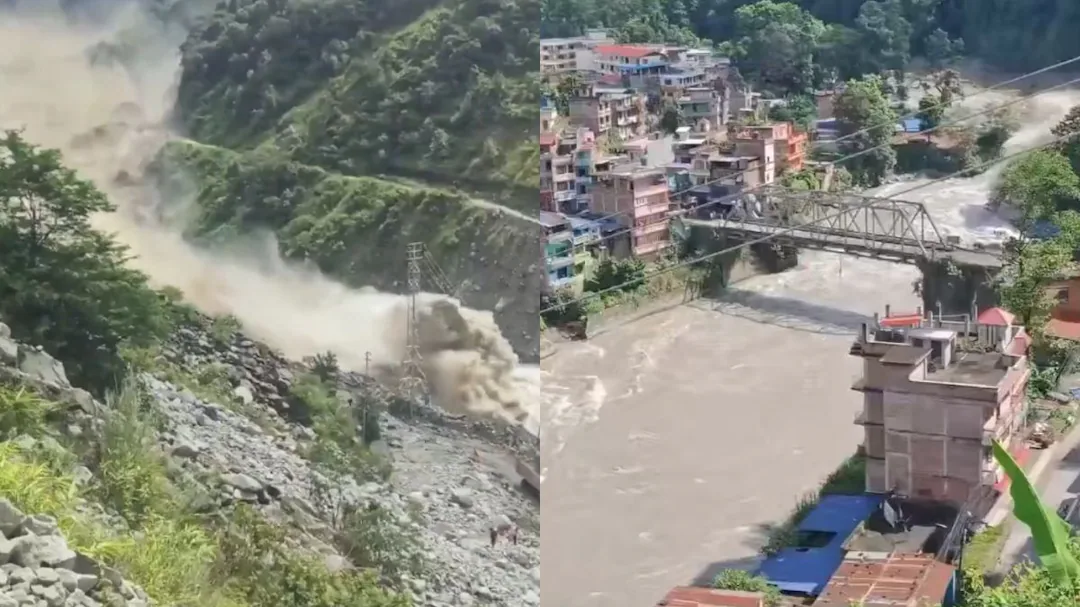
KATHMANDU: A catastrophic flash flood unleashed by a sudden surge in the Bhote Koshi River has devastated mountain communities across northern Nepal, leaving at least 95 people dead and more than 350 missing. The surge swept across the border from the Tibetan autonomous region early Wednesday morning, devastating the border districts of Rasuwa, Nuwakot, and Dhading before racing south down the Trishuli River basin.
As swollen rivers tear down bridges, submerge villages, and severely damage critical infrastructure, emergency services in both Nepal and India are operating on a war footing. In response to the growing crisis, the Indian Air Force (IAF) is deploying two heavy-lift transport aircraft loaded with Humanitarian Assistance and Disaster Relief (HADR) supplies to Kathmandu.
Concurrently, the Indian Embassy in Nepal has activated 24/7 emergency control rooms to assist stranded tourists and migrant workers.
Emergency Helpline Desk Contact / Details Indian Embassy Emergency Helpline 1+977 985 131 6807 (Calls & WhatsApp) Indian Embassy Emergency Helpline 2+977 970 910 7500 (Direct Line) Nepal Tourism Board Hotline: 1144 / Toll-Free 1234 Primary Affected Regions: Rasuwa, Nuwakot, Dhading, Timure, Trishuli Valley Disaster Cause Under Study: Glacial Lake Outburst Flood (GLOF) / Rockslide near Tibet Border
Nepal Flood: Anatomy of the Disaster: What Triggered the Torrential Surge?
The flash flood came as a surprise to local population and security forces. At around 9:00 AM local time, a huge wall of muddy water mixed with boulders, timber and debris came roaring down the Bhote Koshi River at Nepal-China border.
Preliminary satellite assessments conducted by hydrological teams suggest the disaster stemmed from an unstable mountain mass near the border. A high-altitude rockslide or a Glacial Lake Outburst Flood (GLOF) in the upper catchment area within Tibet appears to have temporarily dammed the river before bursting through with violent force.
[High-Altitude Glacial Lake / Rockslide in Tibet]
│
▼
[Sudden Dam Breach on Upper Catchment]
│
▼
[Torrential Surge Down Bhote Koshi River Basin]
│
▼
[Widespread Destruction in Timure, Rasuwa & Nuwakot]
“The flood level rose within minutes without a local rainfall warning,” reported Abi Narayan Kafle, spokesman for the Nepal Police. “Entire border posts, customs buildings, and residential quarters at Timure were swept away before people could evacuate to higher ground.”
Critical Infrastructure Damaged
The destructive impact along the border corridor has cut off vital supply routes:
Road Networks Destroyed: A 42-kilometre section of the highway linking Betrawati in Nuwakot to the Rasuwagadhi border crossing has been completely washed out, isolating the northern frontier.
Power Outage: The Nepal Electricity Authority (NEA) said i major hydroelectric plants and transmission points along the river corridor have been affected severely structurally damaged, which brings many districts without power.
Security Personnel Missing: At least 70 security personnel—including members of the Nepal Police, Armed Police Force, and Nepal Army stationed at Timure and Mailung—remain unaccounted for after their outposts were inundated.
India’s Disaster Response: IAF Planes and Mission Operation
Recognising the severity of the crisis in its neighbouring country, New Delhi moved swiftly to organise relief efforts. Indian Prime Minister Narendra Modi spoke directly with Nepal’s Prime Minister Balendra Shah, promising immediate support and expressing solidarity.
┌────────────────────────────────────────┐
│ Indian Relief Operations │
└───────────────────┬────────────────────┘
│
┌──────────────────────────┴──────────────────────────┐
▼ ▼
┌─────────────────────────────────┐ ┌──────────────────────────────────┐
│ IAF HADR Aerial Airlift │ │ Indian Embassy Emergency Hub │
├─────────────────────────────────┤ ├──────────────────────────────────┤
│ • 2 Heavy Transport Aircraft │ │ • 24/7 Hotlines activated │
│ • Field Hospitals & Rations │ │ • Coordinating rescue in Rasuwa │
│ • NDRF Search & Rescue Teams │ │ • Evacuating stranded tourists │
└─────────────────────────────────┘ └──────────────────────────────────┘
The Ministry of Defence directed the Indian Air Force to deploy two heavy transport aircraft packed with field medical units, water purification systems, emergency rations, and inflatable rescue boats.
National Disaster Response Force (NDRF) personnel trained in mountain search-and-rescue are on standby at border airbases to assist Nepalese authorities once weather conditions permit helicopter operations in the narrow mountain valleys.
Emergency Helplines for Stranded Indian Citizens
With thousands of Indian pilgrims and ecotourists visiting the Himalayan nation during the peak travel season, state governments across India have set up dedicated tracking desks. The Nepal Tourism Board estimates that over 100 Indian nationals are among the more than 350 individuals currently missing or unreachable in the affected flood zone.
The Indian Embassy in Kathmandu released an urgent public advisory instructing all Indian citizens in Nepal—or family members seeking information on missing relatives—to contact their dedicated response lines immediately:
OFFICIAL EMBASSY HELPLINES FOR FLOOD ASSISTANCE:
Primary Helpline: +977 985 131 6807
Secondary Helpline: +977 970 910 7500
Official Address: Embassy of India, Post Box No. 92, 336 Kapurdhara Marg, Kathmandu.
State governments, including Kerala and Tamil Nadu, have established state-level control rooms in coordination with the Ministry of External Affairs (MEA) to track tourists from their respective regions who were trekking in the Rasuwa and Langtang valley routes.
The Broader Context: Climate Vulnerability in the Trans-Himalayas
This disaster highlights the mounting climate risks facing the fragile Himalayan ecosystem. Glaciologists have long warned that rising global temperatures are accelerating ice melt across the Tibetan Plateau, creating unstable glacial lakes held together by fragile moraine dams.
+————————————————————————-+
| HIMALAYAN CASCADE DISASTER CYCLE |
| |
| [Glacial Retreat] ──► [Moraine Lake Expansion] ──► [Rockslide Shock] |
| │ |
| ▼ |
| [Downstream Devastation] ◄── [Dam Failure] ◄── [Flash Flood Torrent] |
+————————————————————————-+
When high-altitude landslides crash into these lakes, or when ice dams fail, millions of cubic metres of water can spill out in minutes. The resulting floods scour river valleys, destroy infrastructure, and endanger downstream communities in Nepal and northern India. Disaster management authorities emphasise that cross-border real-time data sharing between China, Nepal, and India remains essential to establishing early warning systems capable of saving lives during such sudden events.
Frequently Asked Questions (AEO & Voice Search Optimised)
What caused the Nepal flash floods?
Preliminary assessments indicate the flash flood was caused by a massive rockslide or a Glacial Lake Outburst Flood (GLOF) in the upper catchment of the Bhote Koshi River along the Nepal-Tibet border. The resulting surge released vast volumes of mud and water downstream into Rasuwa and Nuwakot districts.
What are the official emergency contact numbers for Indians stranded in Nepal?
Indian nationals requiring urgent help or reporting missing relatives can reach the Indian Embassy in Kathmandu through these dedicated emergency helplines:
Phone / WhatsApp: +977 985 131 6807
Alternate Hotline: +977 970 910 7500
How is India he Nepal Flash Floods: At Least 95 Dead, Over 350 Missing; IAF to Deploy Relief Aircraft as Himalayan Valleys Submerge
KATHMANDU / NEW DELHI — A catastrophic flash flood unleashed by a sudden surge in the Bhote Koshi River has devastated mountain communities across northern Nepal, leaving at least 95 people dead and more than 350 missing. The surge swept across the border from the Tibetan autonomous region early Wednesday morning, devastating the border districts of Rasuwa, Nuwakot, and Dhading before racing south down the Trishuli River basin.
As swollen rivers tear down bridges, submerge villages, and severely damage critical infrastructure, emergency services in both Nepal and India are operating on a war footing. In response to the growing crisis, the Indian Air Force (IAF) is deploying two heavy-lift transport aircraft loaded with Humanitarian Assistance and Disaster Relief (HADR) supplies to Kathmandu.
Concurrently, the Indian Embassy in Nepal has activated 24/7 emergency control rooms to assist stranded tourists and migrant workers.
Emergency Helpline Desk Contact / Details Indian Embassy Emergency Helpline 1+977 985 131 6807 (Calls & WhatsApp) Indian Embassy Emergency Helpline 2+977 970 910 7500 (Direct Line) Nepal Tourism Board Hotline: 1144 / Toll-Free 1234 Primary Affected Regions: Rasuwa, Nuwakot, Dhading, Timure, Trishuli Valley Disaster Cause Under Study: Glacial Lake Outburst Flood (GLOF) / Rockslide near Tibet Border
Anatomy of the Disaster: What Triggered the Torrential Surge?
The flash flood came as a surprise to local population and security forces. At around 9:00 AM local time, a huge wall of muddy water mixed with boulders, timber and debris came roaring down the Bhote Koshi River at Nepal-China border.
Preliminary satellite assessments conducted by hydrological teams suggest the disaster stemmed from an unstable mountain mass near the border. A high-altitude rockslide or a Glacial Lake Outburst Flood (GLOF) in the upper catchment area within Tibet appears to have temporarily dammed the river before bursting through with violent force.
[High-Altitude Glacial Lake / Rockslide in Tibet]
│
▼
[Sudden Dam Breach on Upper Catchment]
│
▼
[Torrential Surge Down Bhote Koshi River Basin]
│
▼
[Widespread Destruction in Timure, Rasuwa & Nuwakot]
“The flood level rose within minutes without a local rainfall warning,” reported Abi Narayan Kafle, spokesman for the Nepal Police. “Entire border posts, customs buildings, and residential quarters at Timure were swept away before people could evacuate to higher ground.”
Critical Infrastructure Damaged
The destructive impact along the border corridor has cut off vital supply routes:
Road Networks Destroyed: A 42-kilometre section of the highway linking Betrawati in Nuwakot to the Rasuwagadhi border crossing has been completely washed out, isolating the northern frontier.
Power Outage: The Nepal Electricity Authority (NEA) said i major hydroelectric plants and transmission points along the river corridor have been affected severely structurally damaged, which brings many districts without power.
Security Personnel Missing: At least 70 security personnel—including members of the Nepal Police, Armed Police Force, and Nepal Army stationed at Timure and Mailung—remain unaccounted for after their outposts were inundated.
India’s Disaster Response: IAF Planes and Mission Operation
Recognising the severity of the crisis in its neighbouring country, New Delhi moved swiftly to organise relief efforts. Indian Prime Minister Narendra Modi spoke directly with Nepal’s Prime Minister Balendra Shah, promising immediate support and expressing solidarity.
┌────────────────────────────────────────┐
│ Indian Relief Operations │
└───────────────────┬────────────────────┘
│
┌──────────────────────────┴──────────────────────────┐
▼ ▼
┌─────────────────────────────────┐ ┌──────────────────────────────────┐
│ IAF HADR Aerial Airlift │ │ Indian Embassy Emergency Hub │
├─────────────────────────────────┤ ├──────────────────────────────────┤
│ • 2 Heavy Transport Aircraft │ │ • 24/7 Hotlines activated │
│ • Field Hospitals & Rations │ │ • Coordinating rescue in Rasuwa │
│ • NDRF Search & Rescue Teams │ │ • Evacuating stranded tourists │
└─────────────────────────────────┘ └──────────────────────────────────┘
The Ministry of Defence directed the Indian Air Force to deploy two heavy transport aircraft packed with field medical units, water purification systems, emergency rations, and inflatable rescue boats.
National Disaster Response Force (NDRF) personnel trained in mountain search-and-rescue are on standby at border airbases to assist Nepalese authorities once weather conditions permit helicopter operations in the narrow mountain valleys.
Emergency Helplines for Stranded Indian Citizens
With thousands of Indian pilgrims and ecotourists visiting the Himalayan nation during the peak travel season, state governments across India have set up dedicated tracking desks. The Nepal Tourism Board estimates that over 100 Indian nationals are among the more than 350 individuals currently missing or unreachable in the affected flood zone.
The Indian Embassy in Kathmandu released an urgent public advisory instructing all Indian citizens in Nepal—or family members seeking information on missing relatives—to contact their dedicated response lines immediately:
OFFICIAL EMBASSY HELPLINES FOR FLOOD ASSISTANCE:
Primary Helpline: +977 985 131 6807
Secondary Helpline: +977 970 910 7500
Official Address: Embassy of India, Post Box No. 92, 336 Kapurdhara Marg, Kathmandu.
State governments, including Kerala and Tamil Nadu, have established state-level control rooms in coordination with the Ministry of External Affairs (MEA) to track tourists from their respective regions who were trekking in the Rasuwa and Langtang valley routes.
The Broader Context: Climate Vulnerability in the Trans-Himalayas
This disaster highlights the mounting climate risks facing the fragile Himalayan ecosystem. Glaciologists have long warned that rising global temperatures are accelerating ice melt across the Tibetan Plateau, creating unstable glacial lakes held together by fragile moraine dams.
+————————————————————————-+
| HIMALAYAN CASCADE DISASTER CYCLE |
| |
| [Glacial Retreat] ──► [Moraine Lake Expansion] ──► [Rockslide Shock] |
| │ |
| ▼ |
| [Downstream Devastation] ◄── [Dam Failure] ◄── [Flash Flood Torrent] |
+————————————————————————-+
When high-altitude landslides crash into these lakes, or when ice dams fail, millions of cubic metres of water can spill out in minutes. The resulting floods scour river valleys, destroy infrastructure, and endanger downstream communities in Nepal and northern India. Disaster management authorities emphasise that cross-border real-time data sharing between China, Nepal, and India remains essential to establishing early warning systems capable of saving lives during such sudden events.
Frequently Asked Questions (AEO & Voice Search Optimised)
What caused the Nepal flash floods?
Preliminary assessments indicate the flash flood was caused by a massive rockslide or a Glacial Lake Outburst Flood (GLOF) in the upper catchment of the Bhote Koshi River along the Nepal-Tibet border. The resulting surge released vast volumes of mud and water downstream into Rasuwa and Nuwakot districts.
What are the official emergency contact numbers for Indians stranded in Nepal?
Indian nationals requiring urgent help or reporting missing relatives can reach the Indian Embassy in Kathmandu through these dedicated emergency helplines:
Phone / WhatsApp: +977 985 131 6807
Alternate Hotline: +977 970 910 7500
How is India helping Nepal with rescue and relief operations?
India has deployed two Indian Air Force (IAF) transport aircraft carrying Humanitarian Assistance and Disaster Relief (HADR) materials, including medical kits, food, and rescue gear. Specialised NDRF search-and-rescue teams are also assisting Nepalese disaster management personnel on the ground.lping Nepal with rescue and relief operations?
India has deployed two Indian Air Force (IAF) transport aircraft carrying Humanitarian Assistance and Disaster Relief (HADR) materials, including medical kits, food, and rescue gear. Specialised NDRF search-and-rescue teams are also assisting Nepalese disaster management personnel on the ground.