





















Why the Transatlantic Alliance Feels More Fragile Than Ever
Eight decades after WWII, US–Europe ties are strained by populism, war, and distrust. Why the transatlantic alliance still matters for global power
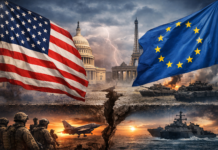
For the first time since American troops crossed the Atlantic to rescue a shattered Europe eight decades ago, the bond between the Old World and the New feels genuinely strained.
This is not about one summit, one president, or one war. It is about a slow corrosion of trust—political, cultural, and strategic—that has been building for years. The transatlantic alliance, long treated as the immovable foundation of Western power, now looks less like a shared project and more like an uneasy habit.
From Washington, especially in MAGA-aligned circles, Europe is increasingly dismissed as decadent, demographically anxious, and strategically dependent—a continent that expects protection without paying the price. From European capitals, the United States appears volatile, inward-looking, and politically unpredictable, capable of abandoning commitments with a single election.
The danger lies not in disagreement. Alliances survive disputes. The danger lies in mutual contempt.
Europe’s reliance on American power once made strategic sense. Today, with war raging on its eastern flank, that dependence feels less like reassurance and more like exposure. For America, the temptation to shrug is understandable—but short-sighted. U.S. power has always been magnified by allies willing to follow. Without them, influence hardens into coercion, and leadership gives way to resistance.
This is not the end of the transatlantic alliance. But it is the end of complacency.
This article is an analysis piece based on historical context, public political discourse, and strategic trends. It reflects interpretation, not advocacy.
The US–Europe alliance is under strain due to populism, political distrust, and security imbalances. While Europe fears abandonment, America risks losing legitimacy. Despite tensions, both remain strategically dependent on each other for global stability.
❓ PEOPLE ALSO ASK
Is the transatlantic alliance collapsing?
No. Institutions remain strong, but political trust is eroding.
Why does the US still need Europe?
For legitimacy, coalition power, and global influence.
Can Europe defend itself without the US?
Not fully—yet. Defense gaps remain significant.
By Himanshu Sharma
Himanshu Sharma is a media professional and geopolitical analyst focused on global power shifts, international relations, and strategic narratives across the US, Europe, and Asia.