




















Table of Contents
- What Is Erectile Dysfunction?
- Common Causes
- Early Symptoms
- Lifestyle Risk Factors
- Medical Conditions Linked to ED
- Diagnosis
- Treatment Options
- Prevention
- Frequently Asked Questions
Beyond the Bedroom: Why Erectile Dysfunction Deserves Medical Attention Before It’s Too Late
This article is written using evidence-based medical literature and guidance from leading health organizations, including the American Urological Association, European Association of Urology, and the American Heart Association. It is intended to educate readers about erectile dysfunction, its possible causes, and the importance of seeking timely medical evaluation. The information provided is for educational purposes only and should not replace professional medical advice, diagnosis, or treatment. If you experience persistent erectile dysfunction or other concerning symptoms, consult a qualified healthcare professional for personalized care.
Erectile Dysfunction
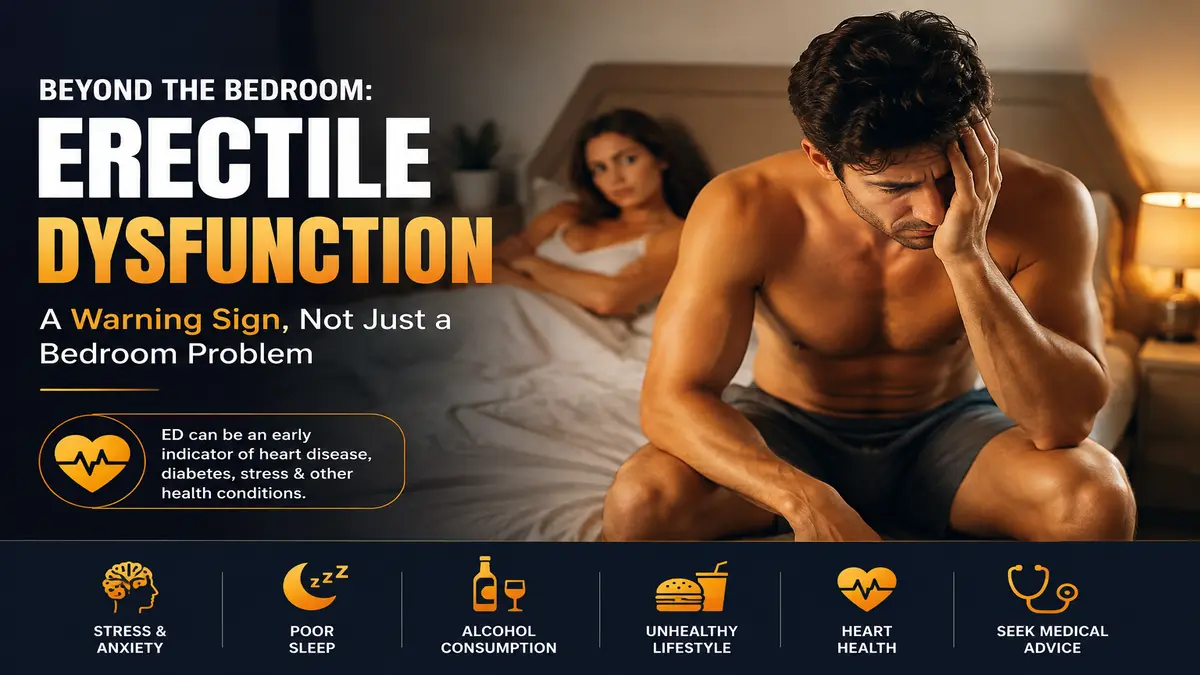
Most people think erectile dysfunction (ED) begins and ends in the bedroom. As someone who has spent years studying health communication and analyzing medical research, I’ve learned that this belief often prevents men from seeking timely medical care. In many cases, erectile dysfunction isn’t simply about sexual performance—it can be one of the earliest signs that the body is under physical or psychological stress.
An occasional episode after heavy alcohol consumption, poor sleep, intense work pressure, emotional strain, or simple exhaustion is common. Nearly every man experiences temporary erectile difficulties at some point in life. These isolated incidents usually resolve naturally and don’t necessarily indicate disease.
The concern begins when erectile dysfunction becomes frequent, creates anxiety, damages relationships, or causes someone to avoid intimacy altogether. At that point, ED stops being merely a sexual concern—it becomes a health concern.
Medical organizations, including the American Urological Association (AUA) and the European Association of Urology (EAU), recommend evaluating persistent erectile dysfunction because it is often linked to cardiovascular disease, diabetes, hormonal imbalance, depression, and lifestyle-related illnesses.
What Exactly Is Erectile Dysfunction?
Erectile dysfunction is the consistent inability to achieve or maintain an erection sufficient for satisfactory sexual activity.
Doctors generally consider ED clinically significant when it persists for several weeks or months rather than occurring occasionally.
Temporary erection problems may happen because of:
- Poor sleep
- Emotional strain
- Heavy alcohol consumption
- Stress and anxiety
- Fatigue
- Relationship conflicts
- Excessive work pressure
These situations temporarily affect hormone levels, blood flow, and the nervous system. Once the trigger disappears, normal function usually returns.
Persistent erectile dysfunction is different. It deserves proper medical attention.
Erectile Dysfunction Is Often the Body’s Early Warning System
One of the biggest misconceptions is that erectile dysfunction only affects intimacy.
In reality, erections require the healthy functioning of several body systems simultaneously:
- Healthy blood vessels
- Strong heart function
- Proper nerve communication
- Balanced testosterone levels
- Healthy mental state
- Good sleep quality
If any one of these systems begins to fail, erectile dysfunction may become the first noticeable symptom.
Many cardiologists even describe ED as the body’s “check engine light.”
Why?
Because the arteries supplying blood to the penis are much smaller than those supplying the heart. If blood vessels begin narrowing due to plaque buildup, erectile dysfunction often appears years before symptoms such as chest pain or heart attacks.
Several large population studies have found that men with erectile dysfunction have a significantly higher risk of future cardiovascular disease.
Ignoring ED may therefore mean ignoring one of the earliest opportunities to detect a serious medical condition.
The Lifestyle Habits Quietly Increasing Erectile Dysfunction
Modern lifestyles are creating a perfect storm for erectile dysfunction.
1. Chronic Stress and Work Pressure
Deadlines, financial worries, long working hours, and constant digital connectivity increase cortisol—the body’s primary stress hormone.
High cortisol suppresses testosterone, reduces sexual desire, and interferes with normal erections.
Many young professionals experiencing ED today are physically healthy but mentally overwhelmed.
2. Poor Sleep
Sleep is when testosterone production reaches its peak.
Men sleeping fewer than six hours consistently often experience:
- Reduced testosterone
- Lower libido
- Fatigue
- Poor concentration
- Reduced erectile quality
Sleep apnea also contributes significantly to erectile dysfunction but often remains undiagnosed.
3. Heavy Alcohol Consumption
Alcohol may reduce inhibitions temporarily, but excessive drinking suppresses nerve signals, lowers testosterone, and decreases blood flow.
Occasional drinking is rarely a problem.
Regular heavy alcohol consumption is.
4. Poor Diet and an Unhealthy Lifestyle
Fast food, sugary drinks, processed foods, and obesity gradually damage blood vessels.
Since erections depend heavily on healthy circulation, poor cardiovascular health frequently appears first as erectile dysfunction.
5. No Physical Exercise
A sedentary lifestyle reduces circulation, contributes to obesity, and increases insulin resistance.
Research consistently shows that regular aerobic exercise improves erectile function naturally by improving blood vessel health.
Even 30 minutes of brisk walking five days each week can produce measurable benefits.
6. Watching Pornography
Pornography itself does not automatically cause erectile dysfunction.
However, excessive or compulsive pornography use may contribute to sexual performance problems in some individuals by creating unrealistic expectations, reducing arousal with real-life partners, or reinforcing anxiety around intimacy.
Current research on this topic is mixed, and more high-quality studies are needed. Rather than assuming pornography is the sole cause of ED, healthcare professionals recommend looking at the broader picture, including stress, relationship dynamics, mental health, and lifestyle.
7. Masturbation
One of the internet’s biggest myths is that masturbation causes permanent erectile dysfunction.
Scientific evidence does not support this claim.
Masturbation is a normal sexual behavior for many people and does not damage erectile function. Problems may arise only if it becomes compulsive, interferes with relationships, or is associated with excessive pornography use and psychological distress.
Blaming masturbation alone often distracts from more important underlying causes such as diabetes, heart disease, anxiety, poor sleep, or depression.
Medical Conditions Frequently Linked to Erectile Dysfunction
Persistent ED may indicate underlying health problems, including:
- Diabetes
- High blood pressure
- High cholesterol
- Heart disease
- Low testosterone
- Thyroid disorders
- Obesity
- Depression
- Anxiety disorders
- Neurological diseases
In many patients, erectile dysfunction appears years before these illnesses are formally diagnosed.
That makes early evaluation especially valuable.
The Emotional Impact Is Real
Erectile dysfunction affects much more than sexual performance.
Many men experience:
- Loss of confidence
- Embarrassment
- Relationship tension
- Anxiety before intimacy
- Depression
- Social withdrawal
Partners may mistakenly believe the loss of erections means loss of attraction.
Often, the opposite is true.
Many men become trapped in a cycle where one episode creates anxiety, anxiety causes another episode, and confidence gradually disappears.
Breaking this cycle usually requires addressing both the emotional and physical aspects of erectile dysfunction.
When Should You See a Doctor?
You should seek medical advice if:
- Erectile dysfunction persists for more than a few weeks.
- The problem occurs regularly rather than occasionally.
- Morning erections become less frequent.
- Sexual desire changes significantly.
- ED causes relationship problems.
- You have diabetes, hypertension, obesity, or high cholesterol.
- You experience chest discomfort, shortness of breath, or reduced exercise tolerance alongside ED.
Early diagnosis often leads to simpler and more effective treatment.
How Erectile Dysfunction Is Evaluated
Doctors don’t simply prescribe medication and move on.
A proper evaluation typically includes:
- Medical history
- Lifestyle assessment
- Blood pressure measurement
- Blood sugar testing
- Cholesterol profile
- Testosterone evaluation when appropriate
- Mental health screening
- Cardiovascular risk assessment
This comprehensive approach helps identify the true cause rather than masking symptoms.
Can Erectile Dysfunction Be Reversed?
For many men, yes.
Treatment depends on the underlying cause and may include:
- Weight loss
- Regular exercise
- Better sleep habits
- Reduced alcohol intake
- Smoking cessation
- Stress management
- Psychological counseling
- Treatment of diabetes or hypertension
- Prescription medications when medically appropriate
- Hormone therapy only in confirmed testosterone deficiency
The best outcomes usually come from combining healthy lifestyle changes with appropriate medical care.
Common Myths About Erectile Dysfunction
Myth: ED only affects older men.
Fact: Younger men can also develop erectile dysfunction due to stress, anxiety, hormonal issues, diabetes, or cardiovascular risk factors.
Myth: It’s all in your head.
Fact: Psychological factors matter, but physical causes are extremely common.
Myth: Taking an ED pill solves the problem.
Fact: Medication can improve erections, but it doesn’t treat underlying conditions such as heart disease or diabetes.
Myth: Masturbation permanently causes ED.
Fact: Scientific evidence does not support this belief. Persistent erectile dysfunction should be evaluated for medical or psychological causes instead.
The Bottom Line: Erectile Dysfunction Is About Health, Not Just Sex
Erectile dysfunction is often the body’s way of asking for attention. While occasional episodes after stress, poor sleep, heavy alcohol consumption, or emotional strain are usually temporary, recurring ED should never be dismissed as “just getting older” or something to hide.
Persistent erectile dysfunction may be the first visible sign of cardiovascular disease, diabetes, hormonal imbalance, depression, or other treatable conditions. Seeking medical advice early can improve not only sexual health but also long-term heart health, mental well-being, and overall quality of life.
The strongest message is simple: don’t let embarrassment delay care. When the body repeatedly sends a signal, listening to it could be one of the most important health decisions you make.
What is erectile dysfunction?
Erectile dysfunction (ED) is the persistent inability to achieve or maintain an erection firm enough for satisfactory sexual activity. While occasional erection problems caused by stress, poor sleep, fatigue, or heavy alcohol consumption are common, persistent ED may indicate an underlying medical or psychological condition that requires professional evaluation.
What causes erectile dysfunction?
The most common causes of erectile dysfunction include:
- Cardiovascular disease
- Diabetes
- High blood pressure
- High cholesterol
- Hormonal imbalance
- Chronic stress
- Emotional strain
- Poor sleep
- Heavy alcohol consumption
- Smoking
- Obesity
- Lack of physical exercise
- Anxiety and depression
- Side effects of certain medications
What are the early signs of erectile dysfunction?
Early symptoms of erectile dysfunction may include:
- Difficulty getting an erection
- Trouble maintaining an erection during sex
- Reduced morning erections
- Decreased sexual confidence
- Lower sexual desire in some cases
- Anxiety before intimacy
- Avoiding sexual relationships due to performance concerns
Can erectile dysfunction be reversed?
Yes. Many cases of erectile dysfunction improve when the underlying cause is treated. Depending on the diagnosis, treatment may include lifestyle changes, better sleep, stress management, regular exercise, weight loss, counseling, or prescription medication under medical supervision.
When should you see a doctor for erectile dysfunction?
You should consult a healthcare professional if:
- Erectile dysfunction lasts for several weeks.
- The problem happens repeatedly.
- It affects your relationship or emotional well-being.
- You have diabetes, high blood pressure, or heart disease.
- Morning erections become less frequent.
- Erectile dysfunction begins suddenly without an obvious cause.
Occasional Erectile Problems vs. Erectile Dysfunction
| Occasional Erection Problems | Persistent Erectile Dysfunction |
|---|---|
| After poor sleep | Happens frequently |
| After heavy alcohol consumption | Continues for weeks or months |
| During temporary stress | Occurs regardless of circumstances |
| Resolves naturally | Requires medical evaluation |
| Usually not a medical disorder | May indicate an underlying health condition |
Google often extracts comparison tables for featured snippets.
How is erectile dysfunction diagnosed?
Doctors typically diagnose erectile dysfunction by reviewing:
- Medical history
- Lifestyle habits
- Blood pressure
- Blood sugar levels
- Cholesterol levels
- Hormone tests (when appropriate)
- Mental health assessment
- Cardiovascular risk factors
“People Also Ask” (PAA) Section
Is erectile dysfunction permanent?
Not always. Many cases improve after treating the underlying cause, such as stress, diabetes, obesity, poor sleep, or cardiovascular disease.
Can stress alone cause erectile dysfunction?
Yes. Chronic stress can interfere with hormone production, blood flow, and mental focus, contributing to erectile dysfunction.
Does poor sleep affect erections?
Yes. Poor sleep can reduce testosterone production and negatively affect sexual function.
Is erectile dysfunction a sign of heart disease?
Sometimes. Persistent erectile dysfunction may be an early warning sign of cardiovascular disease because reduced blood flow affects the smaller arteries first.
Does masturbation cause erectile dysfunction?
Current scientific evidence does not support the idea that normal masturbation causes permanent erectile dysfunction. Persistent symptoms should be evaluated by a healthcare professional.
FAQ Schema
- What is erectile dysfunction?
- What causes erectile dysfunction?
- Is erectile dysfunction reversible?
- Can stress cause erectile dysfunction?
- When should you see a doctor?
- Is erectile dysfunction a sign of heart disease?